Tile Match Solitaire merges card visuals with triple-tile puzzles
Solitaire Club: Tile Match, developed by Sprigame, is an Android puzzle app that repackages Solitaire iconography into a triple-tile matching experience for relaxed play. The core loop asks players to remove sets of three identical card-themed tiles and manage a limited collection bar while clearing layered boards. Visual emphasis is on thick 3D card-style tiles and large-print icons; the design targets casual puzzlers and older adults who prefer low-pressure brain training.
What kind of game does the app present?
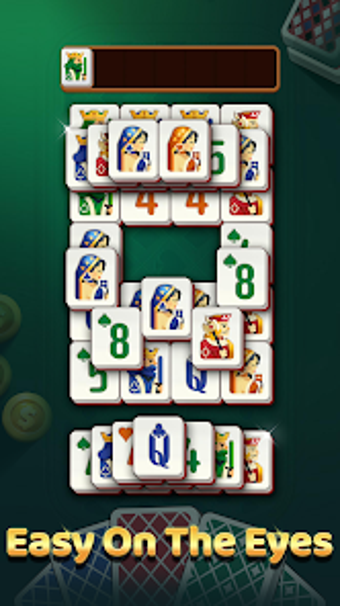
In this game, the player works through layered boards that combine Solitaire imagery with Mahjong-like selection. The app centers on a triple-match mechanic: tap three identical card-themed tiles to move them to the collection area and clear the board. Levels end when all tiles are removed or the collection bar fills; the goal is spatial deduction and planned tile sequencing rather than speed.
How do levels and core mechanics play out?
In play sessions, the tile layout and the collection bar define the challenge. The app requires matching three identical tiles of vintage card icons; matched tiles go into a limited slot bar (typically seven slots). If the bar fills without completing a trio, the level restarts. There are no timers, which keeps each puzzle a turn-based exercise in memory and selection rather than a race against the clock.
What does the app look and feel like on mobile devices?
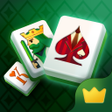
The presentation leans on tactile 3D tiles and classic King, Queen, Ace artwork to give a card-like feel on-screen. The interface is clean and uses large-print designs that improve legibility for older players. The visuals suit both phones and tablets, and tile thickness and shading aim to give a physical sense of pieces when tapped, supporting deliberate, focused play.
How long does it stay engaging and who benefits?
The app supplies thousands of levels that scale in complexity, which supports extended play and repeated sessions. Puzzles emphasize memory and spatial reasoning as primary rewards, described by the developer as "brain training." Core gameplay functions offline, so sessions on the go remain available. Casual puzzle fans and players who want methodical, contemplative puzzles gain the most from sustained progression.
Who this app best suits and one practical caveat
This title is a sound match for casual puzzle players and older adults who prefer measured, reflective sessions and gradual difficulty growth. However, its emphasis on unhurried selection and absence of time-pressure mechanics reduces appeal for players seeking fast-paced or competitive puzzle modes. For anyone who values calm problem-solving and long puzzle libraries, it is a worthwhile, focused choice.